The research team led by Zhong Jianji at Shantou University has developed a photoredox strategy that enables the coupling of unactivated olefins with aliphatic carbonyl compounds, yielding a series of tertiary alcohols. By applying this photoredox approach to boron-radical coupling reactions, the team has achieved multidirectional coupling of olefins with aliphatic carbonyl compounds. This reaction system is compatible with a wide range of olefin coupling reagents—including α-trifluoromethyl olefins, aliphatic olefins, heteroatom-substituted olefins, styrene, and electron-deficient olefins—representing a significant breakthrough over existing methodologies. This approach offers several key advantages: it is metal-free and proceeds under mild reaction conditions, exhibits excellent compatibility with diverse functional groups, and allows tunable chemoselectivity through simple modifications to the catalytic system.
Abstract
The activation of aliphatic carbonyls to form ketyl radicals for C-C bond construction remains a formidable challenge, primarily due to their highly negative reduction potentials. Conventional strategies typically rely on stoichiometric metal reductants or strongly reducing conditions. Herein, we disclose a general photoredox platform that leverages ligated boryl radicals to efficiently activate aliphatic carbonyls, thus enabling divergent hydroxyalkylation of alkenes under metal-free and mild conditions. Notably, this strategy accommodates a wide range of alkenes, including α-trifluoromethyl olefins, aliphatic olefins, heteroatom-substituted alkenes, styrenes, and electron-deficient alkenes. Furthermore, by fine-tuning the catalytic system, the coupling of α-CF3 alkenes with aliphatic carbonyls can be selectively directed toward either defluoroalkylation or hydroalkylation products with high chemoselectivity, highlighting the versatility and tunability of this approach. Mechanistic studies confirm the critical involvement of ligated boryl radicals in the carbonyl activation. The synthetic utility of this protocol is further demonstrated through late-stage functionalization of pharmaceutically relevant molecules. With its broad substrate scope, good functional group compatibility, and programmable selectivity, this method provides a general and practical strategy for functionalization of aliphatic carbonyls.
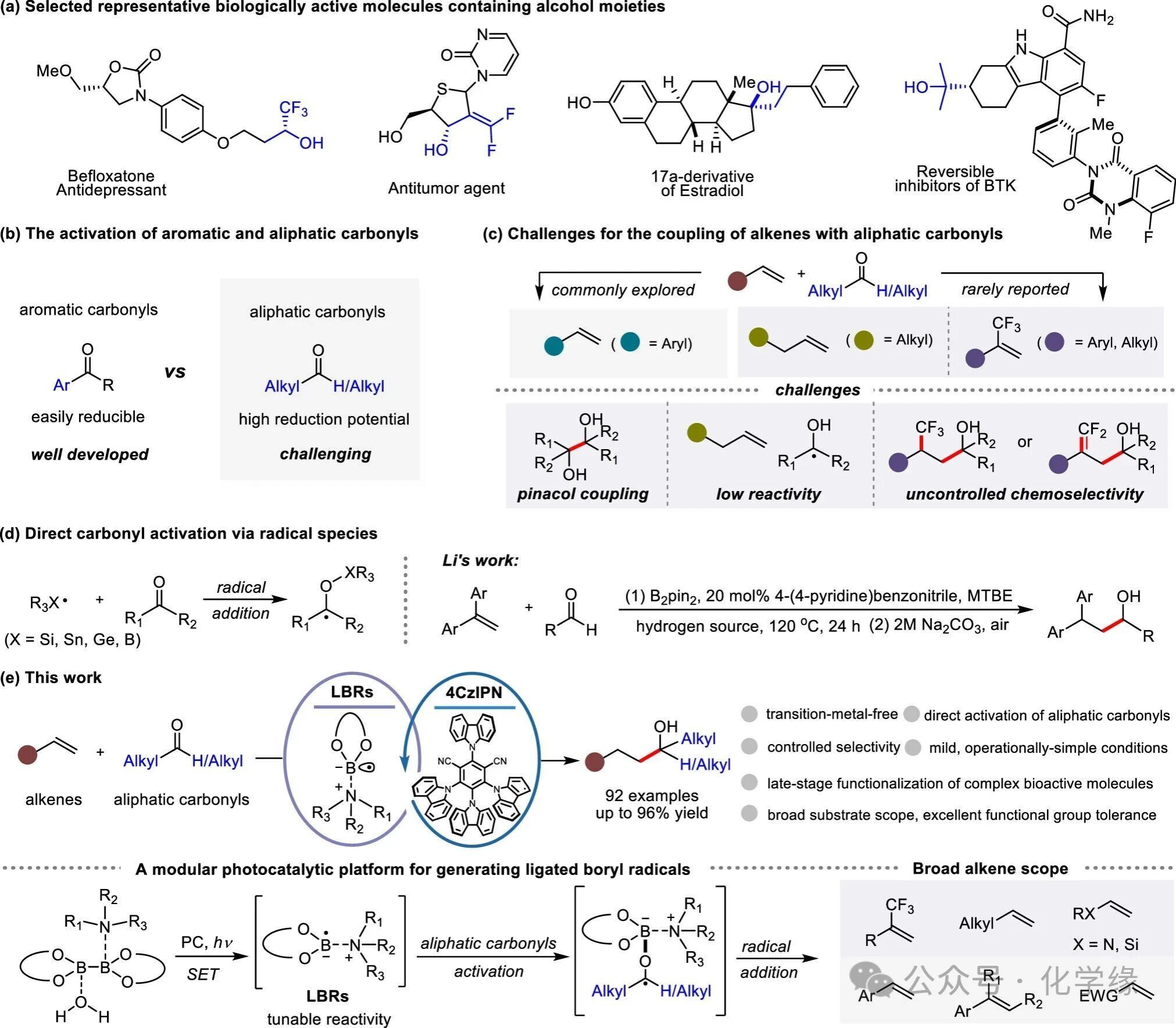
Figure 1: Research Background
The hydroxyl group (−OH) serves as a core structural unit among numerous bioactive molecules. Its ability to form hydrogen bonds and enhance solubility endows it with pivotal roles in molecular recognition, pharmacology, and metabolic processes, thereby establishing alcohols as indispensable constituents in biomedical applications. Consequently, the development of efficient synthetic strategies for such structures has remained a persistent objective in synthetic chemistry. Among various approaches, direct coupling of alkenes with carbonyl compounds has emerged as a highly attractive and straightforward route, owing to its advantages of commercial availability, stability, and low cost; this premise has driven extensive research efforts over the past few decades. Despite considerable progress, the direct activation of aliphatic aldehyde groups still poses enduring challenges compared to aromatic aldehydes, primarily due to their higher reduction potentials and associated thermodynamic limitations.
Traditional approaches to overcome this limitation have typically relied on excess strong metal reducing agents, such as zinc, manganese, or samarium diiodide. Although effective, the inherent practical drawback of stoichiometric metal consumption has driven the search for alternative catalytic strategies. Recent advances have given rise to powerful electrochemical and photochemical methodologies capable of directly activating aliphatic carbonyls for coupling reactions with alkenes. While these strategies circumvent the need for stoichiometric metal reducing agents, they still require highly reducing cathodes or ultraviolet irradiation to meet the high energy demands of aliphatic carbonyl reduction; consequently, this approach continues to restrict the substrate scope, limiting the variety of available carbonyl compounds and alkenes that can be used. As a result, existing methodologies have primarily focused on styrene derivatives as coupling partners, whereas studies on the coupling of other alkenes (e.g., aliphatic alkenes and α-trifluoromethyl alkenes) with aliphatic carbonyl compounds remain in their early exploratory stages, with only a handful of successful cases reported. Achieving such transformations requires overcoming several key challenges: suppressing competitive pinacol coupling reactions of ketone radicals, addressing the low reactivity of unactivated alkenes, and achieving chemoselective control when employing α-CF₃ alkenes. To date, no general catalytic strategy has been reported that simultaneously addresses all these challenges, underscoring the urgent need to develop novel catalytic systems.
An alternative carbonyl activation strategy employs radical species—including silane-, tin-, germanium-, and boron-based radicals—that can add to the carbonyl oxygen atom to form ketone radicals. Among these, the strategy utilizing boron radicals to generate cross-coupling reactive intermediates has garnered considerable attention. Boron radicals have been demonstrated to effectively directly activate aliphatic carbonyls, enabling ketone–alkene coupling reactions. Representative work by Li's group showed that under thermal conditions, via 4-cyanophenylpyridine-mediated synergistic catalysis, a pyridine-coordinated boron radical derived from B₂pin₂ efficiently activates aliphatic aldehydes to form ketone radicals, which subsequently undergo reduction coupling with 1,1-diarylvinene. This pioneering study establishes the potential of coordinated boron radicals in carbonyl activation; however, their practical application remains limited by the requirement for high-temperature operations and a narrow range of applicable alkenes. Despite these limitations, these findings underscore the value of coordinated boron radicals as key intermediates for the direct activation of aliphatic carbonyls. In the future, developing milder methodologies to generate diverse coordinated boron radicals remains an ideal objective for overcoming these constraints.Recently, leveraging photoredox catalysis, the authors have developed a reaction system in which commercially available amines react with diboron esters. This methodology enables the generation of diverse coordinative boron radicals under mild conditions for reaction screening. Building upon this progress, this study successfully applies this photoredox platform to boron-radical-mediated coupling reactions, overcoming the aforementioned technical bottlenecks and achieving multidirectional coupling of alkenes with aliphatic carbonyl compounds. This reaction system exhibits compatibility with a wide range of alkene coupling agents—including α-trifluoromethyl alkenes, aliphatic alkenes, heteroatom-substituted alkenes, styrene, and electron-deficient alkenes—representing a significant breakthrough over existing methodologies. The approach offers several key advantages: no metal involvement, operation under mild conditions, excellent compatibility with diverse functional groups, and the ability to tune chemical selectivity through simple modifications to the catalytic system. The capacity to precisely control reaction outcomes via systematic optimization of the photocatalytic framework underscores the multifunctional and tunable nature of this photoredox platform.
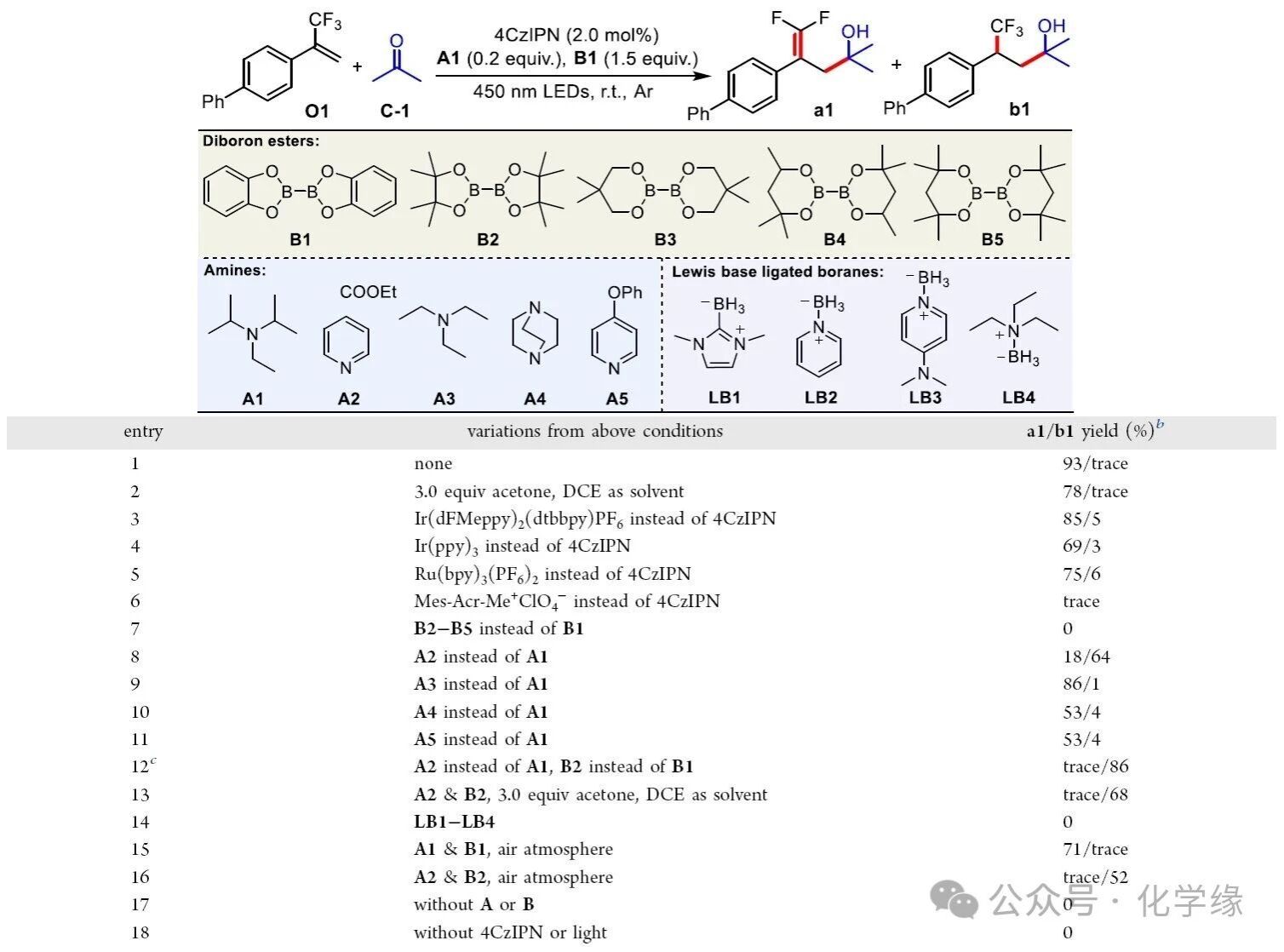
Figure 2. Optimization of reaction conditions
The authors employed the coupling reaction between α-CF₃-styrene O1 and acetone as a model reaction for their study. Although several studies have successfully achieved this transformation, these approaches typically rely on transition metal catalysis and employ stoichiometric metal reducing agents such as zinc or manganese. Furthermore, the strongly electron-withdrawing CF₃ group poses significant selectivity challenges. Existing methodologies are predominantly confined to defluorination-alkylation pathways, yielding exclusively gem-difluoroolefin products. In contrast, systematic exploration of selectivity control in the hydroalkylation of α-CF₃-olefins with aliphatic carbonyl compounds remains scarce to date. Recently, the research group led by Yang reported a phosphine-mediated deoxygenation of hexafluoropropionone hydrate based on photo-redox catalysis, enabling the hydroxy-polyfluorination of α-CF₃-olefins with selective formation of hydroxy-alkylated products rather than defluorination-alkylated products. On the other hand, the team led by Shen achieved chemoselective control over either defluorination-alkylation or hydroxy-alkylation products by precisely selecting the photocatalyst. In this system, the aliphatic carbonyl compound is not directly activated; instead, α-silyl alcohol serves as the substrate, and activation is accomplished via a proton-coupled electron transfer (PCET) process.
When the photo-redox strategy is applied to this reaction, the chemical selectivity can be effectively steered toward either defluorination-alkylation or hydroxyalkylation products by simple adjustments to the catalytic system. Using a catalytic system comprising 2.0 mol% 4CzIPN, 20 mol% diisopropylethylamine A1, and 1.5 equivalents of diboronate B1, the reduction-allylic defluorination coupling reaction between O1 and acetone was efficiently accomplished under 450 nm LED irradiation at room temperature for 1.5 hours, affording the pentafluoroolefin tertiary alcohol a1 in 93% yield, demonstrating excellent chemical selectivity. In this system, acetone serves dual roles as both reactant and solvent. Using a system where 3.0 equivalents of acetone were dissolved in dichloroethane (DCE) also afforded a1, with a yield of 78%. Screening of photocatalysts revealed that replacing 4CzIPN with Ir(dFMeppy)₂(dtbbpy)PF₆, Ir(ppy)₃, or Ru(bpy)₃(PF₆)₂ reduced both reaction efficiency and chemical selectivity, whereas Mes-Acr-Me⁺ClO₄⁻ yielded only trace amounts of a1. Further evaluation of the diboronates B2–B5 confirmed that B1 constitutes the optimal ligand for forming the defluorination-alkylation product a1 in combination with A1 and 4CzIPN. This result stems from the unique catechol ligand in B1, whose conjugative effect significantly diminishes the electron-donating capability of the oxygen atom toward the boron center. This effect enhances the electron-deficient character of the corresponding coordinated boron-centered radical, thereby increasing its electrophilicity (compared to the B2–B5 systems) and ultimately facilitating carbonyl activation.
The influence of the amine catalysts A2–A5 was also investigated, revealing that the electron density at the nitrogen atom center exerts a significant effect on reaction selectivity. When the electron-deficient amine A2 was employed, the reaction pathway shifted markedly from defluorination to protonation, predominantly yielding the hydroxyalkylated tertiary alcohol b1. Through systematic optimization, under the conditions of 20 mol% A2, 1.5 equivalents of B2, and 2.0 mol% 4CzIPN, exclusive formation of the hydroxyalkylated tertiary alcohol b1 was achieved (yield: 86%). The same product b1 could also be obtained using 3.0 equivalents of acetone in DCE as the solvent (yield: 68%).
Furthermore, several Lewis-base-coordinated boranes—commonly used as precursors for boron-centered radical species under photoredox conditions—were evaluated; however, none of these compounds proved effective in either the defluorination alkylation or hydroxyalkylation pathways, underscoring the multifunctionality and unique reactivity of this tunable photoredox platform. The reaction exhibits moderate air tolerance, albeit with reduced yields (a₁: 71%; b₁: 52%). Control experiments confirmed the critical roles of the amine catalyst, diboronate, photocatalyst, and light irradiation in the formation of both a₁ and b₁.
Figure 3. Scope of substrates for difluoralkylation
Standard conditions: α-CF3 olefinsO (0.2 mmol), aliphatic carbonyls C (0.6 mmol), 4CzIPN (2.0 mol %), A1 (20 mol %), B1 (1.5 equiv), DCE (3.0 mL), r.t., Ar atmosphere and 450 nm LEDs irradiation for 1-3 h.
After optimizing the reaction conditions, the substrate scope for the difluoralkylation reaction to afford homo-difluoroenols was investigated using the A1/B1/4CzIPN catalytic system. α-CF₃-styrenes bearing diverse functional groups (including electron-donating and electron-withdrawing substituents at various positions on the benzene ring) exhibited excellent compatibility with this reaction, affording the target products in good to excellent yields (65–96%). This reaction also proved applicable to α-CF₃-olefins with diverse aromatic scaffolds—such as fluorene, pyrene, indole, dibenzofuran, and thiophene—yielding corresponding products in yields ranging from 67% to 92%. α-CF₃-olefins derived from complex bioactive molecules (including cyclopropanecarboxylic acid and gefitinib) were efficiently converted into the target products with yields of 68% and 67%, respectively. Furthermore, aliphatic α-CF₃-olefins, which previously proved challenging to react under reported conditions, underwent defluorination reactions smoothly under this photocatalytic system, affording the corresponding products in yields of 85% and 78%, respectively.
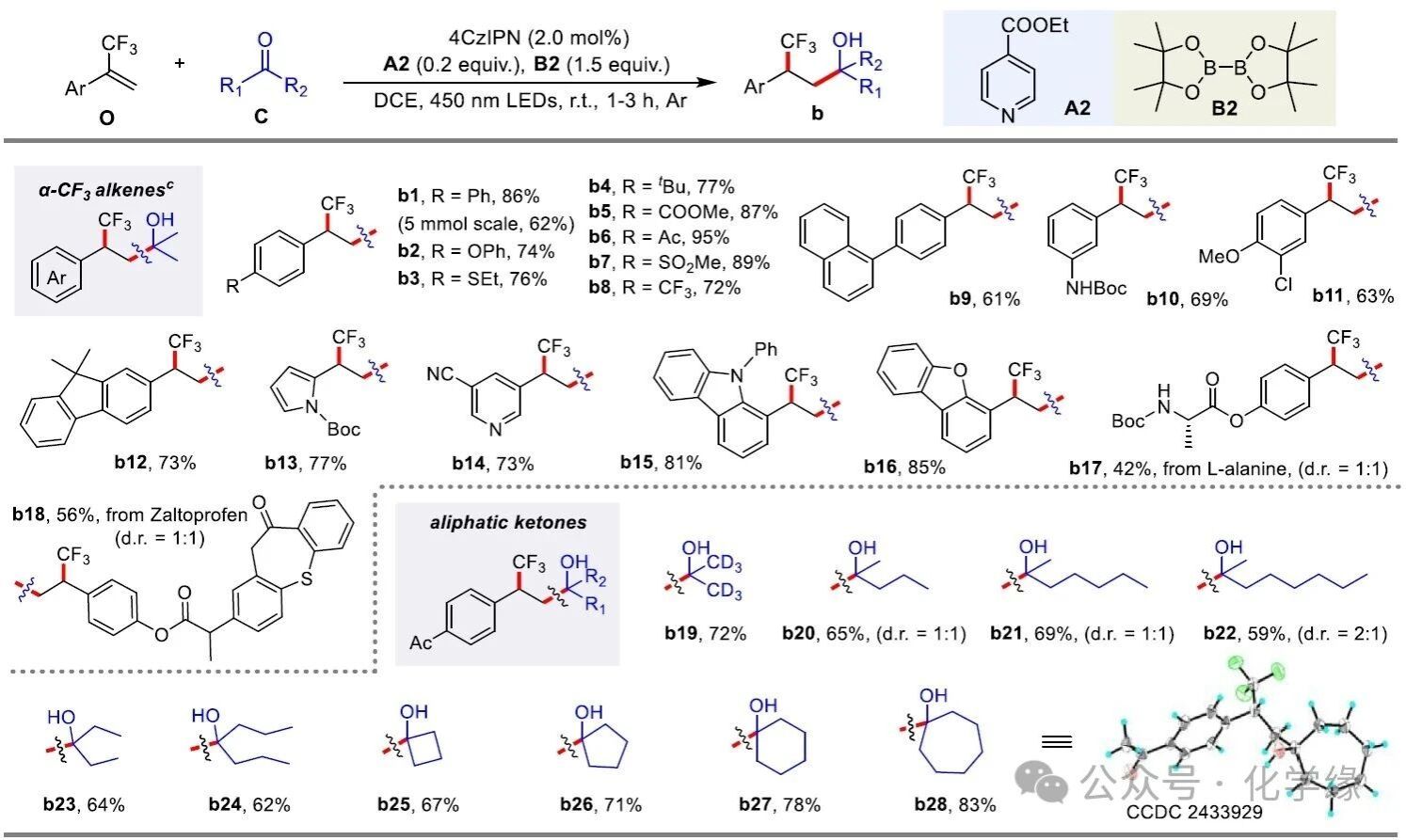
Figure 4. Scope of substrates for hydrogenation
Standard conditions: α-CF3 olefinsO (0.2 mmol), aliphatic carbonyls C (0.6 mmol), 4CzIPN (2.0 mol %), A2 (20 mol %), B2 (1.5 equiv), DCE (3.0 mL), r.t., Ar atmosphere and 450 nm LEDs irradiation for 5-12 h.
By simply switching to the A2/B2/4CzIPN catalytic system, we subsequently investigated the substrate scope of the hydrogenation-alkylation reaction for the synthesis of trifluoromethyl alcohols. Under these conditions, all reactions exhibited excellent chemical selectivity. First, a series of α-CF₃-styrenes bearing electron-donating or electron-withdrawing substituents on the benzene ring were successfully converted to the corresponding trifluoromethyl alcohols in good to excellent yields (61%–95%). The up-cyclization of compound b₁ was completed in 62% yield, demonstrating the practical utility of this methodology. Moreover, various α-CF₃-olefins containing heteroaromatic rings (including pyrrole derivatives, pyridine derivatives, carbazole derivatives, and dibenzofuran derivatives) were efficiently converted to the target products in yields ranging from 73% to 85%. This strategy was also successfully applied to the late-stage functionalization of α-CF₃-olefins derived from complex bioactive molecules (e.g., L-alanine and zalopafen), affording the corresponding products in moderate yields.
Subsequently, research was expanded to investigate the applicability of aliphatic ketones. Deuterated acetone can be effectively incorporated into α-CF₃-alkenes to afford deuterated trifluoromethyl alcohols in 72% yield. When asymmetric aliphatic ketones are employed, although stereocontrol remains challenging, the corresponding products are still obtained in good yields, accompanied by excellent chemoselectivity. Moreover, a variety of linear and cyclic ketones are compatible with this reaction, yielding alkylated alcohols in yields ranging from 62% to 83%.
Figure 5. Substrate scope for other olefins
Standard conditions: olefins O (0.2 mmol), aliphatic carbonyls C (0.6 mmol), 4CzIPN (2.0 mol %), A1 (20 mol %), B1 (1.5 equiv), DCE (3.0 mL), r.t., Ar atmosphere and 450 nm LEDs irradiation for 1-3 h.
This photoinduced redox strategy not only enables chemoselective coupling between aliphatic carbonyl compounds and α-CF₃-alkenes, but also exhibits compatibility with a wide array of other alkenes—a distinctive advantage of this approach. Alkenes bearing heteroaryl substituents, including styrenes, react efficiently with aliphatic carbonyl compounds to afford the corresponding alcohols in good yields. Alkenes containing heteroatom substituents are likewise compatible, yielding the desired products in yields ranging from 53% to 94%. In addition to mono-substituted alkenes, 1,1-and 1,2-disubstituted alkenes also serve as suitable coupling partners, affording the corresponding products in yields of 74%–86%. Furthermore, a series of electron-deficient acrylamides also demonstrate excellent compatibility, yielding the corresponding products in yields ranging from 57% to 90%. This strategy has been successfully applied to unactivated alkenes—substrates that typically resist reaction under conventional conditions. Upon addition of scandium triflate (Sc(OTf)₃), the reaction proceeds to afford the products in moderate yields. Collectively, these findings underscore the broad substrate scope and superior functional group tolerance of this methodology.
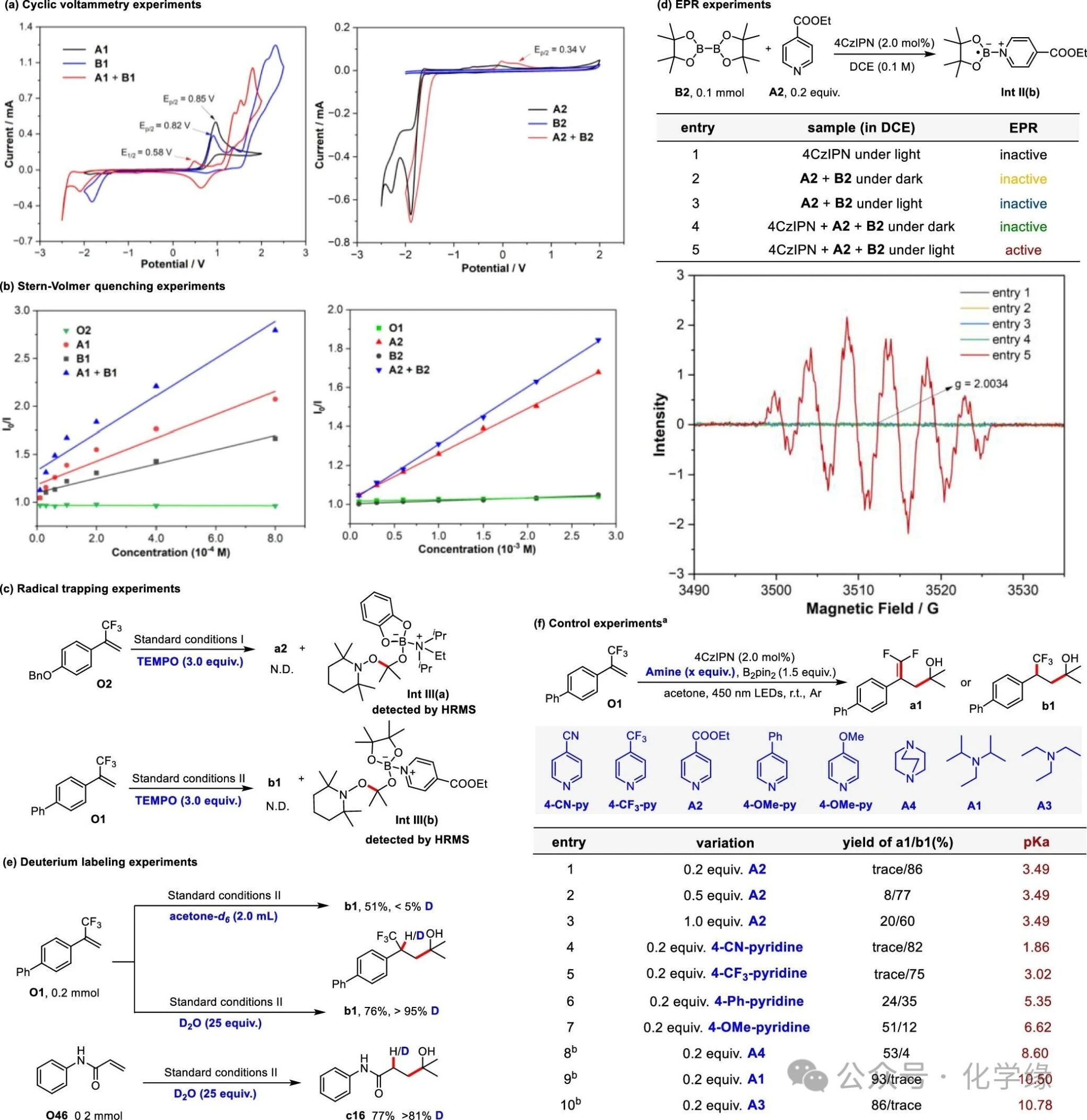
Figure 6: Mechanistic Study
To elucidate the reaction mechanism, a series of mechanistic studies were conducted. Cyclic voltammetry experiments first revealed the role of the amine in activating the boron–boron bond. Radical trapping experiments confirmed the involvement of radical intermediates. Deuterium labeling experiments identified water as the hydrogen source in the alkylation products.
Figure 7. Proposed mechanism
Based on the aforementioned mechanistic experiments and prior studies on this photo-redox system, a plausible reaction mechanism has been proposed. The catalytic cycle initiates with the formation of complex D from an amine, a diboron ester, and H₂O; this complex quenches the excited state of the photocatalyst 4CzIPN* via reduction, yielding the radical cation intermediate I and the reduced photocatalyst 4CzIPN–. Subsequently, cleavage of the B–B bond in Int I generates the key coordinative boronyl radical Int II. This radical then reacts with an aliphatic carbonyl group to form the carbonyl radical Int III, which further attacks the C=C double bond of an alkene to produce the carbon-centered radical Int IV. Single-electron reduction of Int IV by 4CzIPN– regenerates the photocatalytic cycle and yields the carbanion Int V. Finally, Int V undergoes either defluorination or protonation to afford either a defluorinated alkylated or a hydroxyalkylated alcohol product, respectively.
In summary, we have developed a versatile and robust photo-redox strategy that enables divergent synthesis of alcohols via boron-radical-mediated coupling reactions between alkenes and aliphatic carbonyl compounds. This approach exhibits remarkable substrate versatility, accommodating α-trifluoromethyl alkenes, aliphatic alkenes, heteroatom-substituted alkenes, styrene, and electron-deficient alkenes, thereby overcoming the limitations of previously reported methods. The tunability of this strategy allows precise control of chemoselectivity between aliphatic carbonyl compounds and α-CF₃ alkenes simply by modifying the catalytic system, enabling selective access to either epi-difluoroalcohols or trifluoromethyl alcohols. Furthermore, this transition-metal-free catalytic system operates under mild conditions, eliminating the need for stoichiometric metal reductants or strongly reducing environments commonly employed in conventional approaches. It also demonstrates excellent functional group tolerance, making it well-suited for late-stage functionalization of complex bioactive molecules.
Article Information:
A General Photoredox Platform for Divergent Couplings of Alkenes with Aliphatic Carbonyls via Ligated Boryl Radicals
Ting-Ting Miao, Rong-Bin Liang, Yao-Jun Wang, Xiang-Rui Li, Yonghong Xiao, Qing-Xiao Tong, and Jian-Ji Zhong*







 CH
